Beating the Heat: How Often Should You Replace Your Hydraulic Breaker Seal Kit in Hot Weather?
Summer brings peak construction season, but it also brings a major headache for equipment fleet managers and operators: extreme heat. Among all the attachments on a job site, the hydraulic breaker (or hydraulic hammer) takes the absolute worst beating.
When ambient temperatures soar, the internal components of your breaker face a double whammy of structural friction and intense hydraulic heat. At the heart of this battle is your seal system.
If you are operating in high-temperature weather, a critical question arises: How long can your hydraulic breaker seal kit actually last before it needs a replacement? Let's dive into the timeline, the warning signs, and best practices to keep your hammer hitting hard all summer long.
The High-Temperature Timeline: When to Replace
Under standard working conditions (temperate weather, clean oil, and normal workload), a high-quality hydraulic breaker seal kit typically lasts between 1,000 to 1,500 hours of operation, with many manufacturers recommending a preventive replacement every 500 to 800 hours.
However, extreme heat changes the rules completely.
The Golden Rule of Hydraulic Seals: Every $10^\circ\text{C}$ increase in hydraulic oil temperature above its recommended limit ($60^\circ\text{C}$ to $80^\circ\text{C}$) can cut the operating life of a standard rubber or polyurethane seal by 25% to 50%.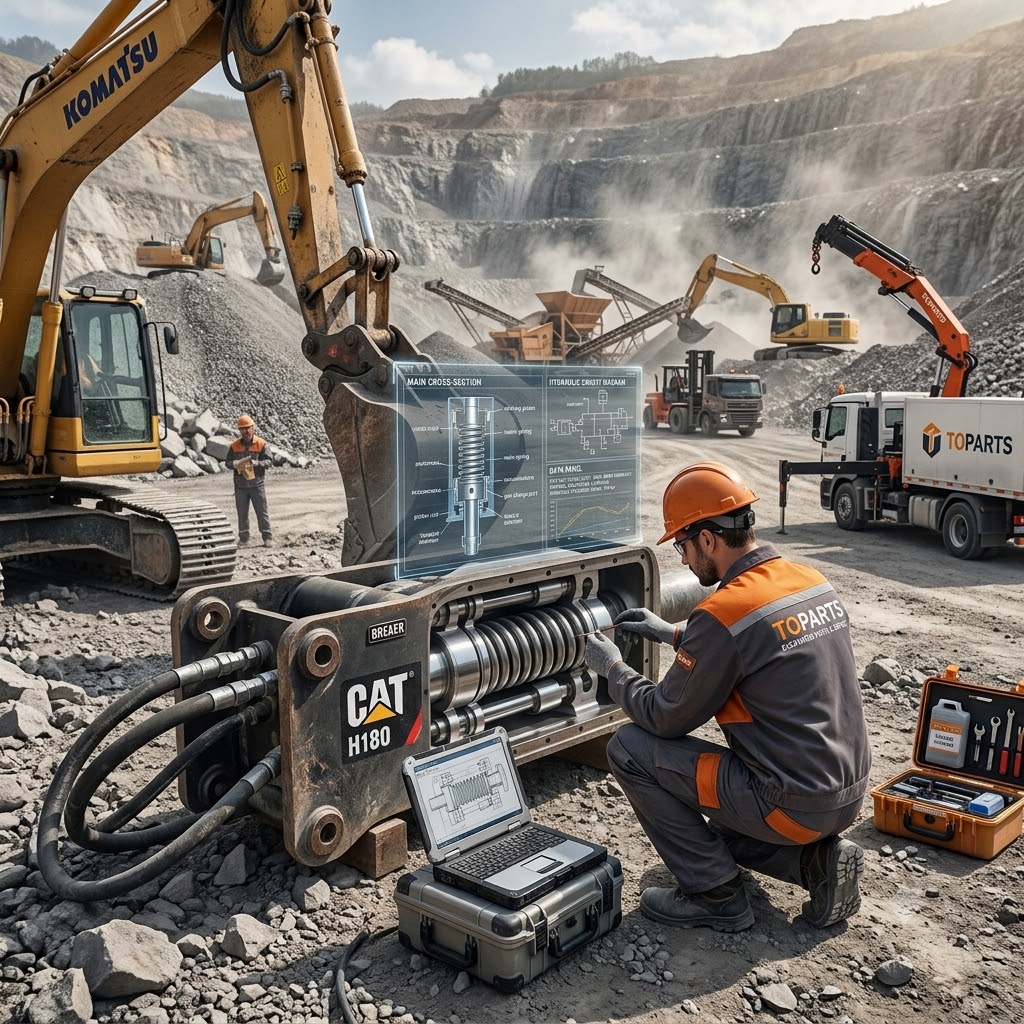
Seal Replacement Intervals Based on Environment
|
Operating Environment |
Recommended Replacement Interval |
|
Normal Weather (<25°C), Regular Maintenance |
1,200 – 1,600 Operating Hours |
|
Hot Weather (30°C – 40°C), Severe Demolition |
600 – 800 Operating Hours |
|
Extreme Heat (>40°C), Poor Cooling / Heavy Abuse |
400 – 600 Operating Hours |
If your excavator or carrier's hydraulic oil temperature regularly exceeds 80°C (176°F) during hot summer days, you should actively inspect the seals every 100 hours and prepare to swap them out much sooner than your standard winter maintenance schedule dictates.
Why High Temperatures Kill Oil Seals
The components inside a standard hydraulic breaker seal kit are primarily made of polyurethane (PU), nitrile rubber (NBR), or fluorine rubber (FKM). While these materials are resilient, extreme thermal stress attacks them in two distinct ways:
Hardening and Loss of Elasticity: Continuous exposure to high oil temperatures bakes the rubber. The seals lose their flexibility, become brittle, and crack under the intense vibration of the hammer.
Softening and Extrusion: Conversely, if the temperature spikes rapidly, some seal compounds soften excessively. The extreme hydraulic pressure then forces the softened seal material into the mechanical clearance gaps (extrusion), tearing it apart.
Warning Signs Your Seals Are Failing in the Heat
You shouldn't always wait for the hour meter to hit a specific number. If you notice any of the following symptoms during a hot summer shift, pull the breaker offline immediately and grab a fresh hydraulic breaker seal kit:
Visible Oil Seepage: Fluid dripping or heavily weeping down the front tool (chisel) or around the dust seal.
Loss of Impact Power: If your breaker feels sluggish or has a noticeable drop in hitting force, internal fluid bypass across a degraded piston seal is often the culprit.
Increased Hydraulic Oil Consumption: Constantly needing to top off your excavator’s hydraulic reservoir.
Discolored or Smoking Fluid: If the oil around the front head looks black or smells burnt, your seals are already severely degraded.
Summer Tips to Prolong Your Breaker's Seal Life
To prevent premature failure and avoid costly downtime this summer, implement these hot-weather maintenance habits:
1. Use High-Temperature Chisel Paste
Standard grease melts and runs like water in hot weather. Switch to a high-temperature Chisel Paste containing copper and graphite, which features a higher dropping point. Lubricate the breaker every 2 hours of continuous use in hot weather.
2. Monitor Hydraulic Oil Viscosity
Hot weather thins out hydraulic oil. Ensure you are using the correct oil viscosity grade (such as ISO VG 46 or 68) recommended for high-temperature operations to keep the system running efficiently and protect the seals.
3. Check Bushing Wear Weekly
Excessive play between the tool and the lower bushing causes the piston to strike at an angle. This "side loading" creates localized friction heat and physically pinches the components of your hydraulic breaker seal kit, destroying them instantly.
The Bottom Line
When the weather gets hot, your maintenance intervals must shrink. Do not rely on the standard 1,000-hour rule when working in scorching summer conditions. Aim to replace your hydraulic breaker seal kit every 400 to 800 operating hours, keep a close eye on daily oil leaks, and always prioritize high-quality, heat-resistant components to keep your projects moving on schedule.
Does your fleet operate in extreme climates? How often do you find yourself swapping out seal kits during the summer peak? Let us know in the comments below!